Editor's Pick
Broadwater rancher turned to Wagyu breed in pursuit of finest cuts of meat
- NICOLE HELDT Scottsbluff Star-Herald
- Updated May 24, 2023
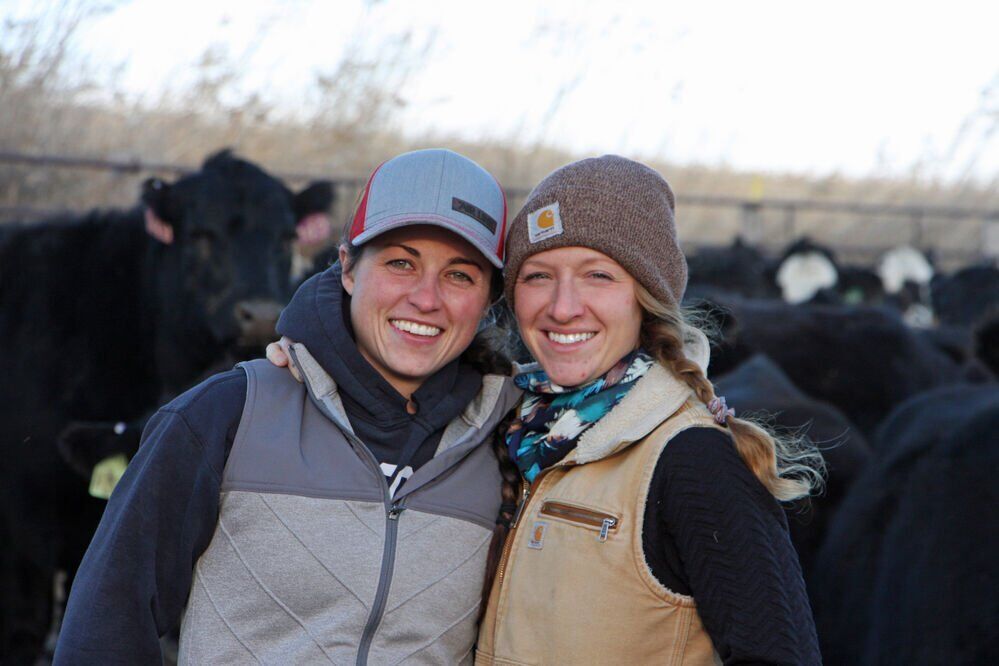
Jaslyn Livingston (left) has helped build up her family's ranch herd with help from wife Aubri Squires. Livingston turned to Wagyu cattle in a breeding program in pursuit of the finest cuts of meat.
NICOLE HELDT, Star-Herald
Prefer us on Google Learn More
NICOLE HELDT Scottsbluff Star-Herald
SCOTTSBLUFF -- Born and raised in the ranchlands of Morrill County, Jaslyn Livingston has always enjoyed working with cattle. After graduating high school, she initially intended to study veterinary science.
Those plans changed though when Livingston observed a veterinarian working to repair a major injury to her horse, an unsettling experience. Realizing she needed to change paths, Livingston attended the Nebraska College of Technical Agriculture in Curtis for two years before completing an online bachelor’s degree through the University of Nebraska-Lincoln.
“I was calving and doing the ranch work and doing homework at night, but I got my bachelor’s degree and have been here ever since,” Livingston said.
Livingston enjoyed her coursework in genetics and was inspired to bring that knowledge back to the family ranch not far from the North Platte River near Broadwater. She began focusing the ranch’s breeding program with a specific goal in mind: achieving the marbling effect that gives consumers the best meat while efficiently managing their time to market.
People are also reading…
- Search for Regina Bos leads to basement of northeast Lincoln home
- Huskers beat up after Oregon: Broken bones and season-ending injury
- Pius X community mourns after Lincoln teen dies in O Street crash
- Man found dead west of Elkhorn identified by Douglas County Sheriff's Office
- Ricketts defends pardon of man convicted of sexually assaulting estranged wife
- Nebraska father sues HHS after agency quotes $1M, 50 years for public records
- Omaha priest remains hospitalized after crashing Lexus SUV
- How to watch Huskers vs. UCLA today
- Texas murder-suicide suspect who killed Doane student also attended Crete school
- Massive elk killed, vehicle totaled in unusual southwest Lincoln crash
- Why an NBA great is wading into the Lancaster County sheriff's race
- No tricks, no treats: Halloween party at Denton castle called off
- How to watch Huskers vs. USC Saturday night
- Regina Bos' sister isn't giving up after basement search turns up nothing
- Nebraska high school football rankings: See who rose and fell after Week 8
Jaslyn Livingston shows the amount of marbling in a pair of 50% Wagyu chuck steaks.
NICOLE HELDT, Star-Herald
Her strategy was to build and maintain an all-black, crossbred cow herd, all essentially carrying similar genetic traits, and then breed that cow group to what are known as terminal Charolais-Angus composite, Wagyu or Angus bulls.
The purpose of terminal crossbreeding programs where all calves are finished for slaughter is to take advantage of specific breed traits. The goal is to maintain the integrity of the established cow herd while using genetics to produce processed beef that will consistently meet Livingston’s standards.
This strategy involves time developing a cow herd with strong maternal genetics that will complement bull genetics to produce top quality feedlot cattle.
Her drive to achieve well-marbled beef cuts led her to the Wagyu breed in search of the ideal crossbred market animal. While there are many cattle breeds that produce quality beef, Livingston was drawn to Wagyu cattle, a Japanese beef breed, simply because of all the attention it was getting.
“Wagyu was getting hype on flavor, and then Cattlemen’s Ball 2014 had a taster of Wagyu products. It was at that point I thought it was getting all this hype so it must be something consumers wanted,” Livingston said.
Mississippi pot roast
Work keeps Jaslyn Livingston and Aubri Squires plenty busy, but the pair enjoy cooking and entertaining friends.
Though the couple prefer a dry rub and searing their Wagyu percentage beef cuts, they shared a coveted recipe they enjoy serving friends:
- 1 Livingston’s chuck roast
- 1 packet ranch seasoning
- 1 packet au jus seasoning
- 1 can pepperoncinis
- 1 stick butter
Mix all in crock pot and cook on low for 8 hours
Livingston began working Wagyu genetics into the herd three years ago. Some of those initial half-blood Wagyu heifers were kept in the herd to explore quarter-blood Wagyu traits, with the remainder fed out.
Held to the same standards as other crossbred feeder calves, Livingston has noticed Wagyu-cross calves take several more months to reach finishing condition but have a phenomenal amount of marbling throughout all the cuts of meat.
“If you looked at them, they would not be the type to take to your county fair. But the dressing percentage was phenomenal compared to the rest of the group," said Mark Livingston, Jaslyn’s dad. "They were all out of the same calf crop ... and the only difference was the dads."
Once finished, the Wagyu cattle are sent to a USDA certified packing plant in Pierce, Colorado, where the meat is dry aged for 14 days at an additional processing cost. The aging process is well known for producing beef cuts that are more flavorful with exceptional tenderness.
When ready, the meat cuts are sold individually out of an industrial cooler on the Livingston ranch or through contacts of Aubri Squires, Jaslyn’s wife. Squires is a travel nurse who usually works in the Denver area but spends her time off working on the Broadwater ranch. Colorado has proved to be a strong market for the Livingston's Wagyu-cross product.
“The key right now is finding people and changing the perception of consumers right now. Small farms like this that are raising this meat for people are right here,” Squires said.
Driver intentionally struck 58-year-old Lincoln man, injuring his leg, police say
What does Nebraska sell? The state's biggest exports by value
Beef
Nebraska regularly leads the nation in beef exports. The state's cattle ranchers send more than $1 billion in beef overseas each year.
BRENDAN SULLIVAN/THE WORLD-HERALD
Combines
Exports of combines edged out corn in 2017, with the state sending $431 million worth of combine harvesters overseas that year.
WORLD-HERALD NEWS SERVICE
Corn
It should be no surprise that the Cornhusker state sells a lot of corn. In 2017, Nebraska exported $430 million worth of corn.
JON LEMONS/THE WORLD-HERALD
Soybeans
Along with corn, soybeans are the state's big crop. Altogether, Nebraska exported about half a billion dollars' worth of soybeans and soybean products in 2017.
WORLD-HERALD NEWS SERVICE
Natural gas
Nebraska's natural gas exports fluctuate year to year, but it's consistently among the state's top exports. In 2017, the state exported $211 million worth of gas.
Pork
Cattle is king in Nebraska, but producers like this family farm in Osmond, Nebraska, still export more than $350 million of pork products each year.
BRENDAN SULLIVAN/THE WORLD-HERALD
Syringes
They may not seem like a Nebraska product, but the state exports more than $100 million in syringes each year. One reason? Medical technology company Becton Dickinson has multiple plants in Nebraska and employs about 2,500 people in the state.
KENT SIEVERS/THE WORLD-HERALD
Nuclear parts
Nebraska's main non-agriculture export is nuclear components, which totaled $920 million in 2019.
CODY WINCHESTER, THE WORLD-HERALD
Miscellaneous chemicals
Chemicals are among Nebraska's fastest-growing exports. The state sent $372 million worth overseas in 2019, a 403% increase from 2010.
BRENDAN SULLIVAN, THE WORLD-HERALD
Nicole Heldt is a reporter with the Star-Herald, covering agriculture. She can be reached at 308-632-9044 or by email at nheldt@starherald.com.
Close
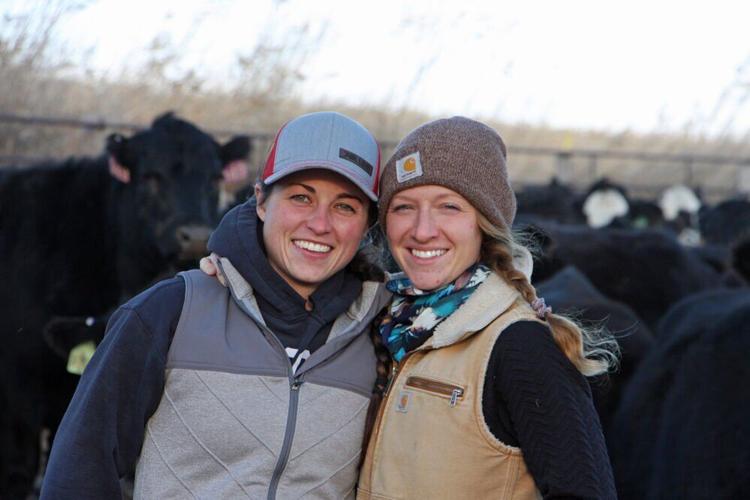
Jaslyn Livingston (left) has helped build up her family's ranch herd with help from wife Aubri Squires. Livingston turned to Wagyu cattle in a breeding program in pursuit of the finest cuts of meat.
- NICOLE HELDT, Star-Herald
Jaslyn Livingston shows the amount of marbling in a pair of 50% Wagyu chuck steaks.
- NICOLE HELDT, Star-Herald