Editor's Pick Topical
One juror holds out on Omaha man's guilt in double slaying
- Todd Cooper Omaha World-Herald
- Updated Nov 22, 2023
Prefer us on Google Learn More
Juror No. 10 didn’t have much doubt, not enough to topple the circumstantial evidence of Nyir Kuek’s guilt in the June 2019 slayings of Michael Sykora and Tracy Atkins.
Nyir Kuek
Eventually, 10 more jurors joined the 62-year-old Omaha man in agreement that prosecutors had proven Kuek’s guilt in the double slaying.
But the 12th juror, the holdout, didn’t budge. The middle-aged Black man — one of three African-Americans on Kuek’s jury — told his fellow jurors he didn’t think prosecutors had presented enough to convict Kuek, 22.
Jurors gently pushed back as they deliberated in the dark-paneled jury room on the fifth floor of the Douglas County Courthouse, a soft-lit room that appears ripped from the set of a John Grisham movie. Across 19 hours, over three days, they gently nudged him to consider the evidence that convinced them of Kuek’s guilt.
People are also reading…
- Search for Regina Bos leads to basement of northeast Lincoln home
- Huskers beat up after Oregon: Broken bones and season-ending injury
- Pius X community mourns after Lincoln teen dies in O Street crash
- Man found dead west of Elkhorn identified by Douglas County Sheriff's Office
- Ricketts defends pardon of man convicted of sexually assaulting estranged wife
- Omaha priest remains hospitalized after crashing Lexus SUV
- Nebraska father sues HHS after agency quotes $1M, 50 years for public records
- How to watch Huskers vs. UCLA today
- Texas murder-suicide suspect who killed Doane student also attended Crete school
- Massive elk killed, vehicle totaled in unusual southwest Lincoln crash
- Why an NBA great is wading into the Lancaster County sheriff's race
- No tricks, no treats: Halloween party at Denton castle called off
- How to watch Huskers vs. USC Saturday night
- Regina Bos' sister isn't giving up after basement search turns up nothing
- Nebraska high school football rankings: See who rose and fell after Week 8
The biggest thing the man kept throwing back at them, according to Juror No. 10: He didn’t trust the justice system. His family had been mistreated on both sides of criminal cases, as victims and defendants, and he didn’t trust that Kuek, who is Black, had been treated any more fairly.
“We said to him, ‘We understand, but the thing is, you’re asked to put all that (history) aside as you decide the case,’" said the juror, pointing to a jury instruction. “Easier said than done.”
It proved to be even more difficult in a case that had little direct evidence connecting Kuek to the scene. Over the course of the two-week trial, Kuek’s attorney, Douglas County Public Defender Tom Riley, pointed out to jurors that prosecutors had no fingerprints, DNA or doorbell videos that put Kuek at Sykora’s Florence-area home.
Jury decides fate of 19-year-old Fairbury man charged in beating death of 2-year-old
Prosecutors Amy Jacobsen and Corey Rothrock pointed out what they did have: the GPS coordinates of Kuek’s mom’s phone pinpointed to Sykora’s house at 6908 Northridge Drive; Kuek admitting that he didn’t have his own phone; and Kuek’s post-arrest meddling with witnesses in the case.
Prosecutors also had two young men, 15 and 20, who were in Sykora’s basement at the time of the killing. Prosecutors say the two had described that a gunman showed up to Sykora’s house because he believed that Sykora had referred to Kuek’s mom as a “bitch” in a text.

The two young men were in the basement playing the war video game “Call of Duty” when Kuek showed up and told them that his gun was better because it was a “real gun.” He flashed a gold-plated, 9 mm Glock handgun.
The gunman confronted Sykora, 57. Sykora denied calling her a bitch and raced up the stairs to retrieve his phone and prove he hadn’t. After he returned, the gunman opened fire, killing Sykora in the basement. He then went upstairs and found Atkins, Sykora’s 50-year-old roommate, in bed, watching something on his phone with headphones in.
Man booked on suspicion of first-degree murder in Omaha slaying
It’s not clear whether Atkins had even heard the shooting. He certainly hadn’t seen the gunman. Yet the gunman shot him twice, killing him in his bed.
The two young men said the gunman returned to the basement and told them he would spare them because they were his “brothers” — meaning they were Black, an Omaha police detective testified. Sykora and Atkins were White.
Grainy surveillance video from down the street showed a man run out of the house first — prosecutors alleged it was Kuek. Soon after, the two young men sprinted away. One of them ran to his house a half block away, and his sister called 911 immediately.
Listen now and subscribe: Apple Podcasts | Spotify | RSS Feed | SoundStack | All Of Our Podcasts
That 15-year-old was a solid witness, but his testimony wasn’t foolproof. Shown a photo lineup of potential gunmen, he scanned across them and stopped on Kuek’s. He told a detective that photo looked like the shooter but he couldn’t be certain.
Omaha pedestrian dies after being hit by two vehicles on North Freeway
The 20-year-old was much more assertive. He identified Kuek as the shooter. But between that 2019 date and this month’s trial, that young man was beaten in an unrelated bar fight. Afterward, he claimed he could no longer remember details of the June 2019 killings. The man, now 23, didn’t show up to testify — and a warrant was issued for his arrest.
Kuek then sat in jail as his case dragged on. Judge Marlon Polk declared a mistrial in his first trial in 2020 because Kuek’s sister contracted COVID-19 and had been in the courtroom watching the trial.
At one point, investigators found a letter Kuek penned in which he urged the 15-year-old to not show up to testify and suggested that he might suffer a beating like the 20-year-old had.
His attorney, Riley, noted that Kuek never sent the letter. Riley argued it was the idea of a cellmate and that Kuek had decided against it. Prosecutors pointed out the Kuek also made jailhouse phone calls in which he wanted friends to try to influence the 15-year-old.
Second of two men goes to federal prison for 33 pounds of meth found in Lincoln
Riley also argued that a friend of Kuek's had been found using the cellphone of Kuek’s mom — and could have been the one who took it to Sykora’s home that night.
Kuek himself took the stand Monday and denied involvement. He put the phone in his friend’s hands that day and said he had stayed home all day, watching YouTube videos and mowing the lawn.
As jury deliberations spilled from Monday into Tuesday, it was clear the evidence hadn’t convinced everyone. At one point, jurors sent a note to the judge saying they were deadlocked at “5 ng and 7 guilty.”
“The persons on not guilty are ‘firm’ and have stated that they will not change their mind,” they wrote to Judge Polk.
At 6 p.m. Tuesday, Polk ordered the jury to go home and return at 9 a.m. Wednesday. By noon Wednesday, Juror No. 10 said, four of the five jurors with not-guilty votes had indeed changed their mind. Juror No. 10 said they were convinced by three primary factors: Kuek’s mom’s phone being at Sykora’s house at the time of the killing, the 15-year-old’s testimony and Kuek’s meddling letters and phone calls from jail.
“It told me, ‘This is a person who was looking for a way out of what he had done,’" said Juror No. 10, who is white.
Also convincing to him: Witnesses had described the gunman as wearing distinct purple and gold basketball shoes. Police found a pair of purple and gold shoes at Kuek’s house. The juror noticed a detail in photos that he said prosecutors hadn’t pointed out: The shoes had a few grass clippings stuck to them. That indicated to the juror that Kuek wore them mowing and to Sykora’s house.
Alas, the evidence wasn’t enough for one. At 3:15 p.m., that juror slumped in his seat in the back row as Judge Polk asked jurors to raise their hands if they thought more deliberations would help.
No one did. A female juror shook her head slightly. Juror No. 10, who had served on a civil jury decades ago, said he didn’t want anyone throwing the holdout “under the bus.” It takes 12 to convict — and 12 weren’t convinced, he noted.
Prosecutors intend to re-try Kuek, who will remain in jail until a new set of jurors arrives at the courthouse in the coming months, each carrying his or her own experiences, each vowing to set those aside, even if that is easier said than done.
“It’s a very difficult thing,” Juror No. 10 said. “Just knowing what happened in that house and in this case … this will stick with all of us for a long time.”
cooper@owh.com, 402-444-1275, twitter.com/CooperonCourts
Close
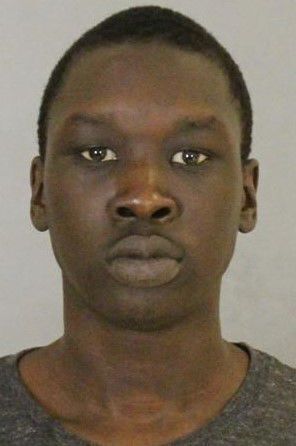
Nyir Kuek